What is LNG ?

Liquefied natural gas (LNG) is a fossil gas made primarily of methane that has been cooled and condensed into a liquid form. This makes it easier to transport, especially by ship over long distances, as it takes up about 600 times less space than its gas form.
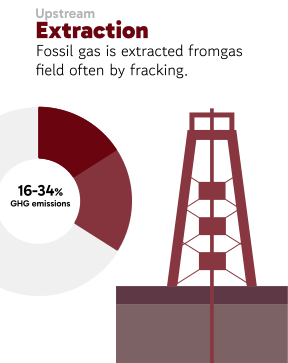
LNG extraction
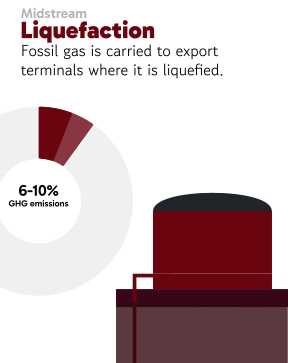
LNG liquefaction
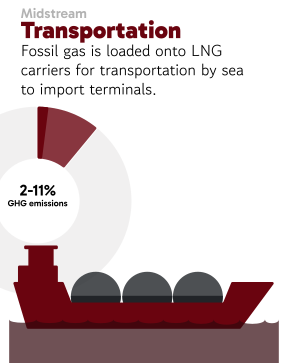
LNG transportation
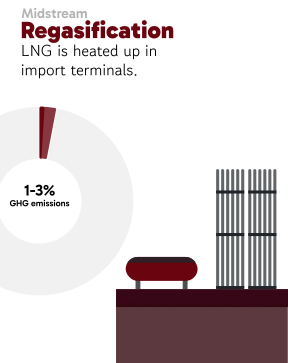
LNG regasification
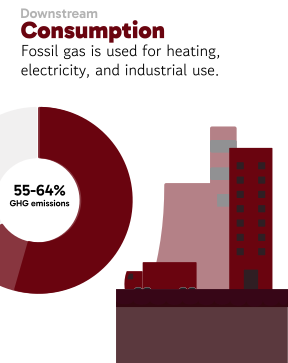
LNG consumption

An unprecedented expansion

LNG has taken center stage in recent years. Following the Russian invasion of Ukraine in February 2022 and the subsequent spike in gas prices, it has been presented by the gas industry as a key solution to maintaining gas supply while ensuring energy security.

The LNG market is now poised for its largest wave of new supply by 2030. Global LNG supply is expected to expand by almost 50%, while global LNG carrier capacity is projected to grow by around 40%.
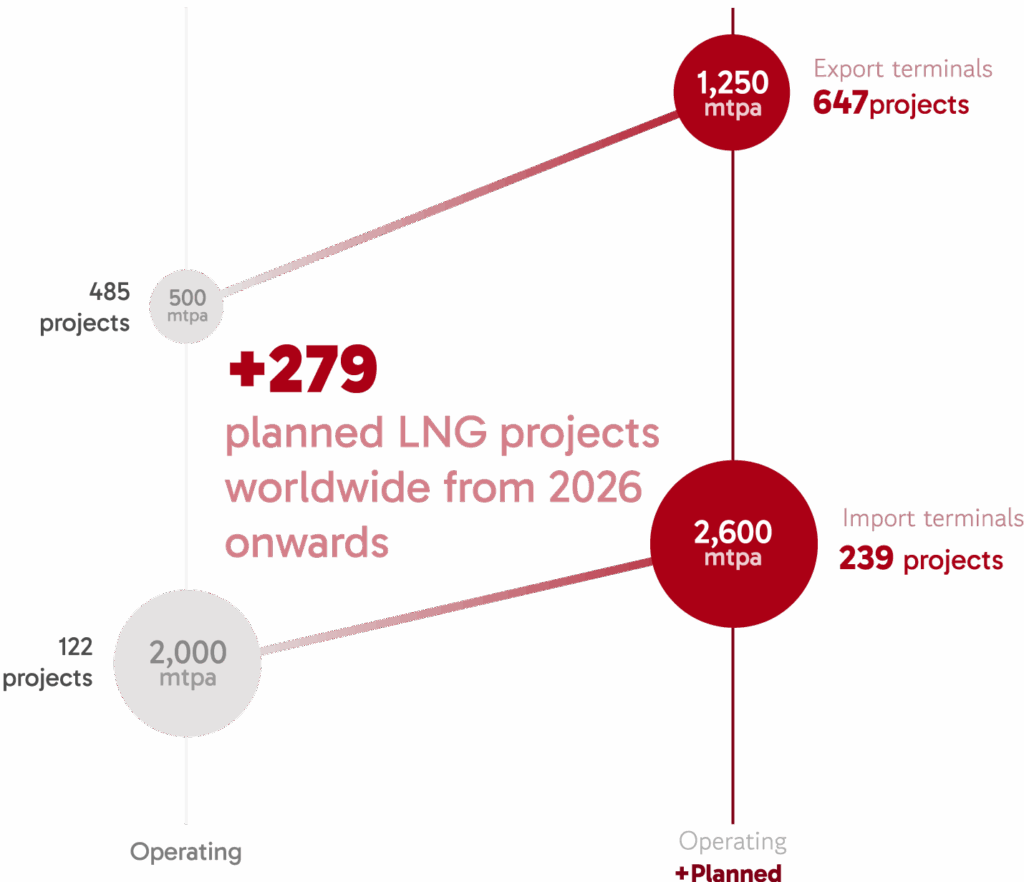
LNG export terminals’ increase is driven by the US

The surge in supply is driven by the massive expansion of LNG capacity in North America — particularly in the US, where the largest capacity increases are expected. Final investment decisions (FIDs) for US LNG projects reached an all-time high in 2025, supported by Donald Trump’s deregulation agenda and continued backing of LNG development. On the demand side, the Asia Pacific region is expected to drive LNG import capacity growth. This is the biggest fossil fuel buildout of our lifetime.

LNG projects are defined as large infrastructure that will significantly increase LNG terminal capacity. This definition can include a completely new terminal, or a specific phase or train of an existing terminal. Each project may have different stakeholders, capacities, timelines, and financing.

Source: Enerdata for existing terminals; Urgewald’s Global Oil and Gas Exit List 2024 for planned terminals

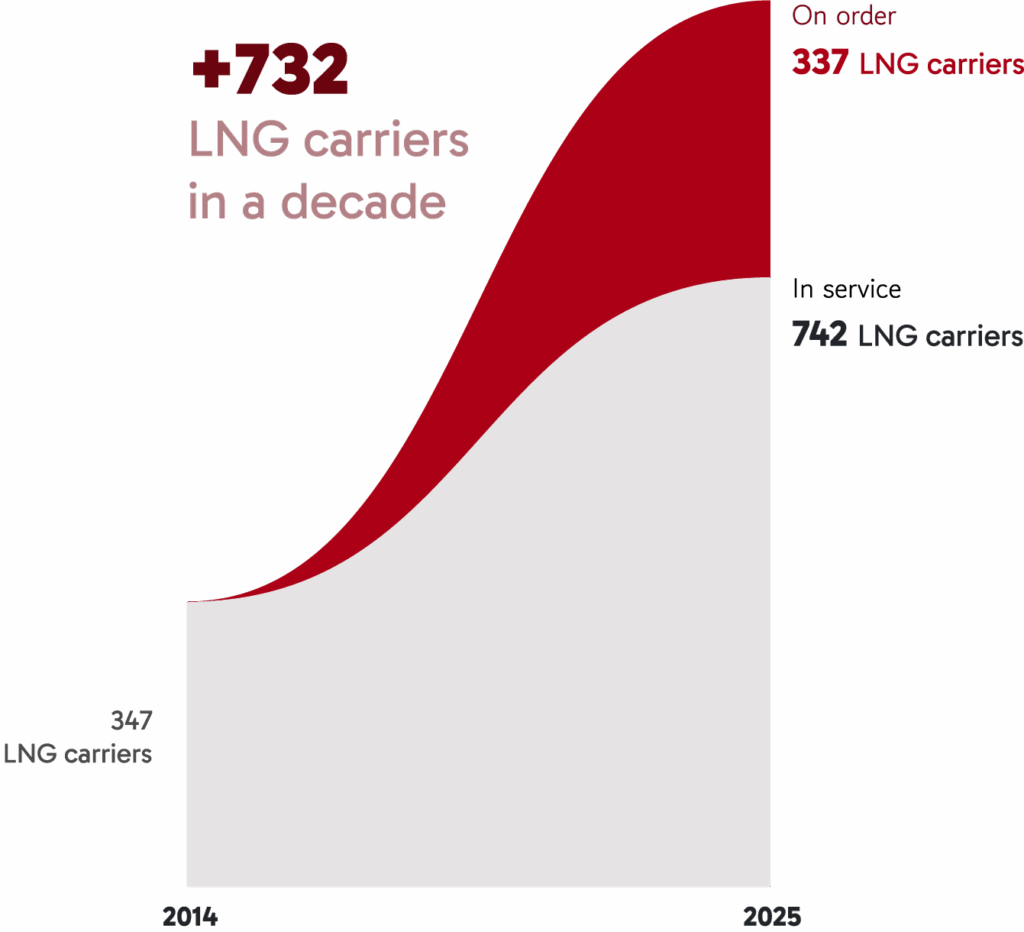
Source: IGU, 2025 World LNG Report https://www.igu.org/igu-reports/2025-world-lng-report, 2025

The sharp increase of LNG carriers

The global LNG carrier fleet has grown dramatically over the past decade with more than 330 new LNG carriers scheduled for delivery from 2026 to 2028 — the largest buildout in the industry’s history. In 2014, there were 347 LNG carriers worldwide. The fleet is expected to reach 1,079 vessels by 2030, including both operating ships and those already ordered. This is an increase of 732 ships — more than a 200% expansion since 2014.

This rapid expansion over a relatively short time reflects long-term investment in LNG supply chains and the growing role of LNG shipping in global energy trade. Indeed, to construct each large modern LNG carrier, close to US$200 million investment is needed. Once it is built, these carriers will operate for 30 years and even for up to 40 years in some cases.

The sharp increase in LNG carriers

The global LNG carrier fleet has grown dramatically over the past decade with more than 330 new LNG carriers scheduled for delivery from 2026 to 2028 — the largest buildout in the industry’s history. In 2014, there were 347 LNG carriers worldwide. The fleet is expected to reach 1,079 vessels by 2030, including both operating ships and those already ordered. This is an increase of 732 ships — more than a 200% expansion since 2014.

This rapid expansion over a relatively short time reflects long-term investment in LNG supply chains and the growing role of LNG shipping in global energy trade. Indeed, to construct each large modern LNG carrier, close to US$200 million investment is needed. Once built, these carriers will operate for 30 years and even for up to 40 years in some cases.

Source: Enerdata, Urgewald’s Global Oil and Gas Exit List 2024

Companies behind the LNG boom

Companies with the largest combined operating and planned capacity (in Mtpa)

150 companies
are responsible for more than 94% of planned export terminal capacities and more than 81% of planned import terminal capacities.

150 companies
are responsible for more than 94% of planned export terminal capacity and more than 81% of planned import terminal capacity.

Capacity per company typology

Among the 150 largest LNG developers, several typologies of companies stand out:

  • companies with upstream core activities, such as integrated companies
  • midstream companies that include LNG specialized companies
  • downstream companies that gather utilities and industrial companies
  • financial institutions, such as private equity funds.

LNG brings climate, social, and economic risks

LNG expansion is incompatible with climate goals and a just energy future. The companies behind these projects and the financial institutions enabling them can stop these harms by retracting their involvement in all LNG expansion projects and ceasing all support to LNG expansion stakeholders.

Climate

LNG is a fossil fuel that accelerates climate change.

It contributes to large amounts of greenhouse gas emissions — especially methane. The 68 LNG export projects planned for start-up up to and including 2030 could contribute to the release of over 10 gigatonnes of CO2 equivalent. This includes more than 58 million tonnes of CO2e from methane releases. Only one-fifth of energy-related methane emissions are reported, according to IEA estimates, and industry promises to tackle methane emissions with carbon capture, certified gas, and hydrogen are unproven or insufficient.

LNG is not a « clean » or « transition » fuel, contrary to what the industry is claiming.
  • LNG expansion drives fossil fuel expansion. It leads to new gas fields and locks in long-term fossil gas dependence. Reclaim Finance identified 46 short-term gas expansion projects (projects under field evaluation or under development) that are directly linked to LNG terminal projects. These account for more than 51 billion barrels of oil equivalent (boe) of gas resources.
  • LNG infrastructure is competing with sustainable energy sources and does little to displace coal in developing and emerging countries, such as India.
  • LNG expansion locks in long-term fossil gas combustion, undermining climate goals – in Europe for instance.

Social

Beyond climate, LNG harms communities and ecosystems.

LNG terminals damage livelihoods (e.g. fishing), strain water resources, and often violate Indigenous and other people’s rights. The promise of job creation locally often falls short. Health problems and pollution are also direct consequences of LNG expansion in neighboring communities. Terminal projects are frequently built in areas with high poverty rates or in predominantly Indigenous communities or communities of color, raising the issue of discrimination and environmental racism.

LNG expansion also destroys biodiversity. Infrastructure and shipping traffic cause water, air, and noise pollution, threaten marine life, and destroy habitats through dredging, thermal pollution, and spills.

Economic

LNG expansion also poses major economic risks.

It is expensive for national governments and communities, and increasingly uncompetitive with renewables. Demand projections are uncertain, and overcapacity could lead to a market bubble, leading to stranded assets and financial losses.

Banks and insurers at the forefront of support

How banks fuel the LNG boom

Banks are key enablers of the global LNG boom. The 65 largest banks have funneled over US$174 billion into LNG expansion since 2021 — with 28 financial institutions increasing their support between 2023 and 2024 (see the methodology for more details. This massive wave of financing guarantees decades of additional greenhouse gas emissions and delays the necessary decline in fossil gas production and use.

The financing is concentrated among a handful of banks headquartered in OECD countries mainly the United States, Japan, China, Canada, and Europe, in particular France demonstrating the influence that a small number of major financial players can have on ending this expansion.

Over
US$ 174 billion
have been funneled into the world’s leading LNG developers between 2021 and 2024 by the 65 largest banks.

The role of insurers in LNG expansion

Insurers play a critical enabling role in the LNG industry: without insurance, LNG terminals and pipelines cannot be built or operated. This gives insurance companies significant leverage over fossil fuel expansion — like their proven impact on coal, where restrictive insurance policies have hindered coal mine operations.

Who’s insuring LNG?

There is very limited data on who insures specific LNG projects. However, investigative research has revealed the insurance companies underwriting the rapid expansion of LNG export terminal projects along the US Gulf Coast. Lloyd’s of London, Liberty Mutual, and QBE are among the top insurers backing twelve existing and proposed US LNG terminals, alongside others such as Zurich, AXA, and SCOR.

Beyond underwriting, some insurers such as AIG and Allianz have significant financial stakes in LNG projects, like Rio Grande LNG and Calcasieu Pass LNG.

Most insurers are still backing LNG

Most of the 30 largest global insurers provide coverage for LNG projects, and only one — Generali — introduced a specific policy to limit this. Generali’s policy, adopted in October 2024, excludes LNG insurance for companies it deems « transition laggards, » though this term lacks clear definition and enforcement mechanisms.

While 21 out of the 30 insurers we analyzed have adopted general oil and gas policies, most of these policies have a very limited scope, allowing LNG expansion to continue unchecked.

End Support for LNG Expansion Now

We – NGOs fighting LNG expansion and communities affected by the LNG boom – call on banks to adopt comprehensive policies to end all financial services for new LNG projects, associated methane carriers, infrastructure, and LNG developers.

We call on insurers to stop providing coverage for new LNG export and import terminals.

We call on companies to immediately halt LNG expansion plans, which are having devastating impacts on communities, ecosystems, and the climate.

Need support for your campaign or information on the companies financing LNG expansion?

In partnership with